Peeking Bunny Embroidery
A Soft-Spoken Easter Charm—Not Just Another Bunny Silhouette
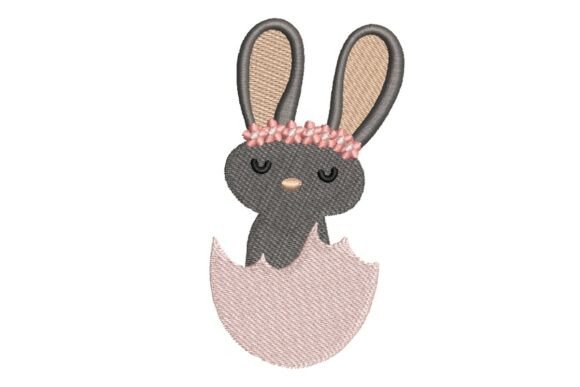
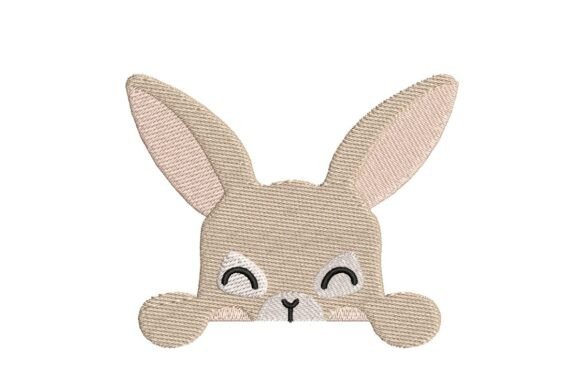
First glance at Peeking Bunny Embroidery feels like catching a quiet moment: a gentle, light brown bunny head just clearing the edge of something unseen—maybe a basket, a windowsill, or the rim of a baby blanket. It’s not bouncing, not holding eggs, not wearing a bow. It’s simply *there*, curious and calm. That restraint is its strength. As a designer who’s stitched hundreds of holiday-themed files for clients—from boutique baby lines to Etsy sellers launching spring collections—I immediately sensed this wasn’t filler. It’s a mood-setter. The textured fill stitch gives warmth without heaviness; the upright ears with soft pink interiors add subtle dimension, not cartoonish exaggeration. It reads as handmade, not mass-produced—and that matters when your customer is paying a premium for authenticity.
Where It Shines in Real Projects
I tested Peeking Bunny Embroidery on three real items: a natural linen tea towel, a midweight organic cotton tote, and a ribbed baby onesie. On the towel, it anchored the top corner beautifully—soft enough to complement hand-stitched hems, detailed enough to hold focus without competing with textural weave. On the tote, it landed cleanly on the front panel (centered just below the shoulder strap), reading clearly from three feet away. And on the onesie? That’s where it surprised me most. The scale—neither too small nor overwhelming—worked with the garment’s gentle curves. Parents don’t want aggressive graphics on newborn wear; they want tenderness. Peeking Bunny Embroidery delivers that without leaning into cliché.
It also translated well into commercial contexts: as a single-design embroidered patch (heat-applied to denim jackets), as a focal point on an apron pocket for a small-batch bakery’s Easter line, and as part of a trio of coordinating designs on pillow covers for a nursery collection. Its simplicity makes it flexible—not locked into one season or demographic. While it’s naturally at home in Easter collections, I’ve already sketched mockups for spring baby showers, gender-neutral nursery decor, and even quiet botanical-themed kitchen goods.
Where to Proceed With Intention
This isn’t a “throw-it-on-anything” file. Its charm relies on clarity and contrast—and that means thoughtful placement matters. Avoid using Peeking Bunny Embroidery on highly textured fabrics like bouclé or thick terry cloth unless you’re willing to adjust stabilizer layers and test stitch density. On stretchy knits (think lightweight sweatshirts or baby bodysuits), it held up fine—but only with cutaway stabilizer underneath and proper hooping tension. On dark fabric, the light brown thread needs careful color matching: a warm taupe or oatmeal works better than stark ecru, which can look washed out. And skip curved surfaces like caps unless you confirm the design’s width fits comfortably within standard cap hoops—those upright ears won’t forgive distortion.
Also note: the “peeking” composition implies negative space. Don’t crowd it. If you’re adding text (“Hello Spring” or a name), place it thoughtfully—below or beside, never overlapping the implied surface line. And while the pink ear interiors are sweet, they’re small details. On sub-3-inch hoop sizes or ultra-fine thread counts, that pink may blend or disappear. Test first.
What It Adds to Your Finished Product—Beyond Cuteness
For craft businesses and Etsy sellers, Peeking Bunny Embroidery quietly lifts perceived value. It doesn’t scream “sale”—it invites pause. Customers linger on listings with this design because it feels intentional, not algorithmic. In personalized gifts—like monogrammed burp cloths or custom tea towels—it balances sweetness with sophistication. No one mistakes it for clip art. That builds trust: when buyers see consistent, considered design language across your shop, they assume the same care went into stitching, packaging, and service.
It also supports brand consistency without limiting versatility. A maker known for minimalist nursery goods can use it straight; a vibrant craft fair vendor can pair it with bold border stitches or contrasting thread accents. And because it avoids heavy saturation or dense satin stitch areas, it’s kinder to machines and more wash-durable than many holiday files—important for baby embroidery or kitchen textiles meant for real life, not shelf display.
Practical Designer Notes Before You Stitch
- Always test on scrap fabric matching your final substrate—especially for thread color contrast and stabilizer behavior.
- Review stitch density: if the textured fill feels too heavy for your fabric weight, consider reducing density by 5–10% in your editing software.
- Check hoop size requirements—this design likely performs best in 4x4" or larger hoops, but verify before committing to a production run.
- Inspect small details in black-and-white mockups: does the pink ear interior read as distinct, or does it vanish against the brown?
- Compare performance on light vs. dark backgrounds—thread sheen changes dramatically depending on base fabric tone.
- Use appropriate stabilizer: tear-away for stable wovens, cutaway for knits or delicate items, and avoid topping unless absolutely necessary (it can mute texture).
- Confirm licensing terms before selling finished items or bundling Peeking Bunny Embroidery as part of digital embroidery file packs—commercial use isn’t automatic.
Final Thought: A Design That Listens
In a landscape crowded with busy, over-designed embroidery files, Peeking Bunny Embroidery stands out by doing less—and meaning more. It doesn’t demand attention; it earns it. Whether you’re stitching for a client’s custom apparel line, building inventory for a spring craft fair, or creating heartfelt personalized gifts, this file respects both your time and your customer’s eye. It’s not flashy. It’s faithful—to craft, to season, and to the quiet joy of a bunny just peeking through.