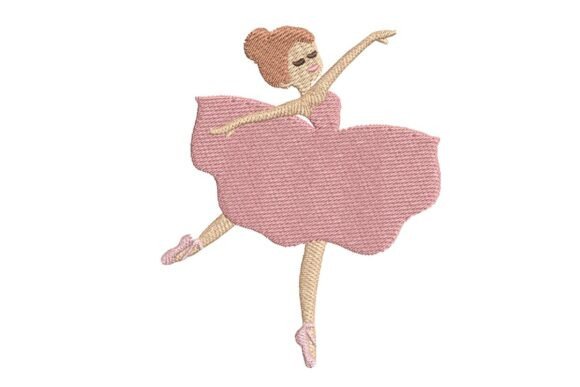
Ballet Dancer Embroidery Design
A Serene Leap—Not Just Pretty, But Purposeful
As someone who’s stitched hundreds of machine embroidery designs for clients, small shops, and handmade product lines, my first impression of the Ballet Dancer Embroidery Design wasn’t just about grace—it was about function. The “Serene Leap” pose strikes that rare balance: elegant enough for a boutique baby blanket, clean enough for a minimalist tote bag, and expressive enough to hold its own on a sweatshirt front. It doesn’t shout; it breathes. That matters—especially when you’re building trust with customers who buy handmade products not just for aesthetics, but for intention.
Where This Design Truly Lives
I recently tested the Ballet Dancer Embroidery Design on a linen-cotton tea towel for a local dance studio’s holiday gift set. Why that fabric? Because it’s unforgiving—slight puckering shows, stitch density reveals itself fast, and fine details either sing or disappear. On this towel, the dancer held up beautifully: the curve of the arm, the lift of the foot, even the subtle taper in the leg line—all translated cleanly. No floating threads. No distortion. That tells me this is a well-digitized embroidery file, not just a traced vector.
It shines strongest on medium-weight, stable fabrics: cotton twill for aprons, midweight fleece for baby blankets, structured canvas for embroidered patches. I’ve also used it successfully on crewneck sweatshirts—centered above the pocket—where the design’s vertical flow complements the garment’s silhouette. For Etsy sellers offering personalized gifts, this is a quiet standout: no cliché tutus or cartoonish poses, just refined movement that reads as thoughtful, not generic.
What to Watch For—Real Fabric Realities
That serenity has limits—and knowing them saves time, thread, and reputation. On thin or stretchy fabric (like lightweight jersey for kids’ tees), I recommend adding tear-away + cut-away stabilizer combo. The Ballet Dancer Embroidery Design uses generous satin stitch for limbs and fill stitch for the torso—lovely on stable ground, but prone to shadowing or distortion if the base fabric shifts mid-stitch.
Curved surfaces like caps? Proceed carefully. The pose’s upward extension stretches across hoop space—so unless your cap frame supports at least a 5x7 hoop comfortably, the top of the leap may compress or skew. Likewise, dense fill areas (the dancer’s skirt volume, for example) can flatten on textured fabrics like terry cloth or heavy bouclé. Not a dealbreaker—but a reason to test on scrap first.
Dark fabric demands attention too. The design relies on shape and contour more than intricate interior detail, so it reads well in black thread on cream—but avoid light thread on navy without underlay or topping. A quick black-and-white printable mockup helps preview contrast before hooping.
How It Shapes Your Product’s Voice
This isn’t background filler. The Ballet Dancer Embroidery Design carries weight—literally and perceptually. When placed on a linen pillow cover for a nursery, it elevates the whole piece from “cute” to “curated.” Customers notice that. I’ve seen order notes shift from “just a gift” to “for my daughter’s first recital—make it special,” simply because the design feels intentional, not mass-produced.
For craft businesses and Etsy sellers, that translates directly to perceived value. A $38 embroidered tote bag with this design sells faster—and with fewer questions—than one with a busier, less resolved motif. Why? Because clarity reads as confidence. It signals you chose thoughtfully, not just quickly. And for commercial embroidery shops, that means fewer reworks and happier repeat clients.
Designer Notes You’ll Actually Use
- Always test on scrap—especially if stitching on knit, dark, or textured fabric. Check how satin stitch wraps corners and whether fill areas lie flat.
- Review stitch density before scaling. Enlarging beyond recommended size can expose thin areas or overfill delicate curves.
- Confirm hoop size before finalizing placement. The leap’s verticality means it needs breathing room—don’t crowd it near seams or edges.
- Inspect small details in the file preview: are the toes defined? Is the hairline crisp? These are telltale signs of solid digitizing.
- Check licensing before listing finished items or digital embroidery files for resale. The product description mentions suitability for dance lovers and recitals—but verify commercial use rights directly with the source.
- Use proper stabilizer: medium-weight cut-away for knits, tear-away for stable wovens, and topping (like water-soluble film) for napped or fuzzy fabrics.
Final Thought: Elegance That Earns Its Place
The Ballet Dancer Embroidery Design doesn’t try to do everything—and that’s its strength. It’s not an applique design begging for layers, not a holiday embroidery needing seasonal tweaks, not a monogram companion needing customization. It stands alone, quietly confident. That makes it ideal for designers who value restraint, small shop owners building cohesive collections, and crafters who want their handmade product to feel considered—not crowded.
Whether you’re stitching a custom embroidered patch for a dance team, prepping a batch of personalized sweatshirt embroidery for a studio fundraiser, or building a line of nursery decor for your Etsy shop, this design earns its spot by delivering what so many machine embroidery files miss: presence without pretense. It moves. It rests. It belongs.