Black Line Floral Minimal Embroidery
A Clean, Confident Statement—Not Just Another Flower
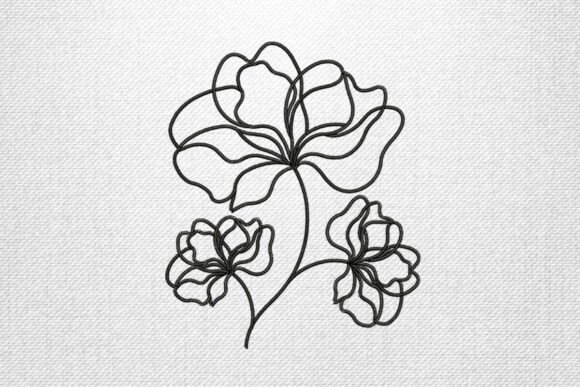
When I first opened Black Line Floral Minimal Embroidery, I didn’t see “cute” or “trendy”—I saw intention. One large central bloom, two smaller blossoms placed with quiet asymmetry, and nothing extra: no fill stitches, no shading, no decorative flourishes. Just confident black linework that breathes. It’s the kind of design that lands softly but stays in memory—like a well-placed signature on a hand-stitched tea towel or the subtle accent on a linen apron for a boutique kitchen brand.
Where It Shines: Real Projects, Real Reactions
Last week, I stitched Black Line Floral Minimal Embroidery onto a natural canvas tote for a local florist’s pop-up shop. No fill, no satin stitch—just clean running stitch outlines. The result? Customers paused. Not to ask “What is it?” but to say, “I want one.” That’s the power of restraint done right. It works especially well on:
- Tote bags and pillow covers—where fabric texture supports line clarity without competing
- Sweatshirts and structured caps—the bold black linework holds up against heavier weaves and curved surfaces
- Baby onesies and nursery pillows—its simplicity reads as gentle, not stark, especially when stitched in soft matte thread
- Holiday gifts and wedding keepsakes—think monogrammed linen napkins or embroidered cotton sachets; the design feels personal without being fussy
For Etsy sellers and small shop owners, this isn’t background noise—it’s a quiet differentiator. In a sea of dense floral fills and glittery appliqué, Black Line Floral Minimal Embroidery signals craftsmanship over clutter.
Where to Pause—and Why
Minimal doesn’t mean universally forgiving. I’ve tested this design across several real-world constraints, and here’s what I’ve learned:
- Thin or stretchy fabric? Use cutaway stabilizer—not tear-away. The long, unbroken lines need consistent support, or they’ll waver on jersey or lightweight rayon.
- Dark fabric backgrounds? Black thread on black fabric disappears. Try charcoal gray thread instead—or reserve it for light-to-mid-tone fabrics where contrast sings.
- Small hoop sizes (under 4”)? Measure the largest blossom before stitching. If it pushes close to the hoop edge, you’ll risk tension distortion in the outer curves.
- Curved surfaces like caps or baby beanies? Test stitch on a scrap cap blank first. The central flower’s longest stem line can pull slightly if hooping isn’t perfectly flush.
- Frequent washing? Avoid high-density zigzag or satin overlines—even though this design uses mostly running stitch, any added embellishment risks fraying over time.
How It Shapes Perception—Beyond the Stitch
As a designer who ships custom-embroidered goods weekly, I pay attention to how a design affects buyer trust. Black Line Floral Minimal Embroidery reads as intentional, edited, and mature. That translates directly to perceived value: customers don’t question whether it’s “enough”—they feel it’s *just right*. On a personalized gift, it avoids looking mass-produced. On a small business apron, it reinforces brand calm and confidence. And for craft fair shoppers flipping through embroidered tea towels? It stands out not by shouting, but by holding space.
It also plays well with branding. Because it’s single-flower focused and line-based, it scales cleanly into digital embroidery file previews, printable mockups, and even simplified vector versions for social media thumbnails—making it a smart asset for digital product sellers and creative entrepreneurs building cohesive design libraries.
Practical Notes from My Hoop Table
Before using Black Line Floral Minimal Embroidery in your next project, here’s my checklist—refined after three rounds of test stitching:
- Always run a test on scrap fabric matching your final substrate—especially if using textured linen, terry cloth, or blended knits.
- Check thread color contrast in natural light *and* under store lighting. Matte black thread behaves differently than glossy polyester on oatmeal canvas.
- Review stitch density—even minimal designs can pack tight corners. Zoom in on the junction where the two smaller blossoms meet the main stem.
- Confirm hoop size compatibility before digitizing or resizing. Some machines handle fine line work better at specific scale ranges.
- Inspect small details at 200% zoom in your embroidery software. Are those petal tips sharp—or do they blur into a single stitch blob?
- Test black-and-white mockups before finalizing listings. This design relies on contrast, not color story.
- Compare light and dark fabric backgrounds side-by-side. What reads as elegant on ivory may read as faint on heather grey.
- Use proper stabilizer—medium-weight cutaway for most apparel, lightweight tear-away only for stable wovens like quilting cotton.
- Verify licensing before selling finished items or bundling the embroidery file commercially. Since it’s listed under Single Flowers and Embroidery, confirm whether it’s for personal use, small business, or extended commercial rights.
Final Thought: Less Is Anchored—Not Empty
Black Line Floral Minimal Embroidery isn’t about removing detail to save time. It’s about knowing exactly which lines carry meaning—and trusting them to do the work. For designers stitching custom apparel, makers building handmade product lines, or Etsy sellers curating thoughtful digital embroidery files, this is the kind of design that earns repeat orders, not just one-time downloads. It doesn’t shout “look at me.” It says, “you already know what matters.” And in today’s crowded craft landscape? That kind of quiet confidence is rare—and deeply usable.